Engineering Ruggedness: Selecting Solar Power Electronics for Remote Oil & Gas Operations in Nigeria
Engineering Ruggedness: Selecting Solar Power Electronics for Remote Oil & Gas Operations in Nigeria
For many Oil and Gas industries operating in Nigeria—the demand for reliable energy isn’t just a matter of convenience; it’s a pillar of operational survival. For remote oil and gas sites, power failure is more than a “blackout”—it’s a catastrophic loss of data, a compromise in safety, and a massive dent in the bottom line.
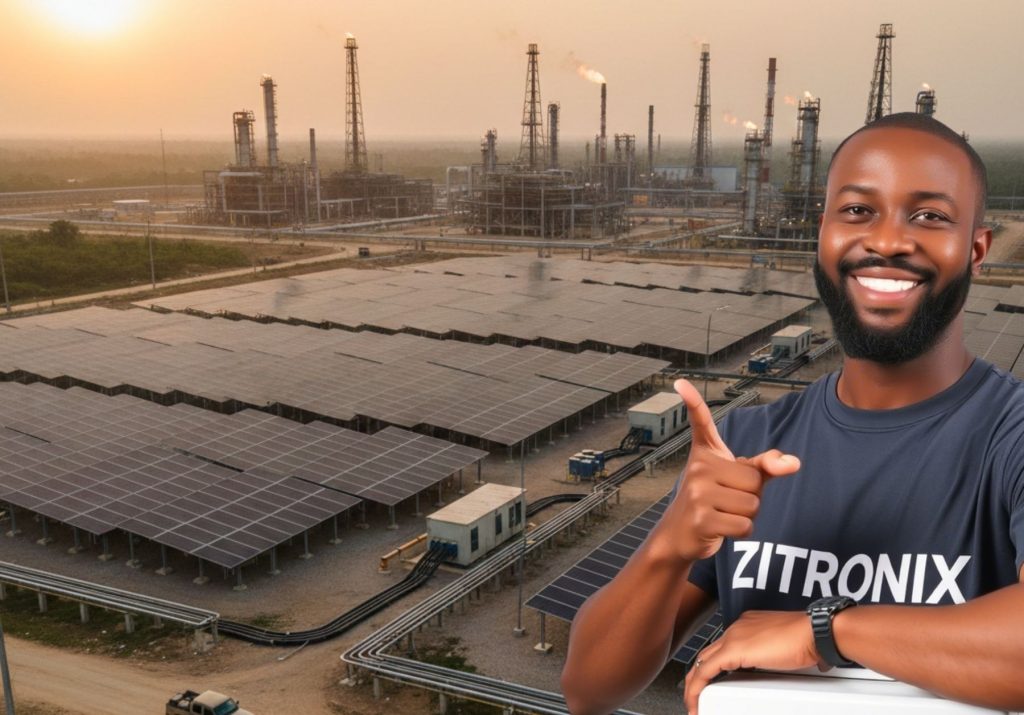
The central challenge? The environment is unforgiving. High humidity, salt-mist corrosion, and extreme heat create a “tech graveyard” for standard consumer electronics. As we look at the best solar inverter in Nigeria 2026, the question isn’t just about who has the sleekest app, but whose engineering can withstand the “ruggedness” of the Delta or the arid vibes of Northern Nigeria. At Zitronix, we specialize in this exact intersection of high-stakes Solar Engineering and specialized power electronics in Nigeria.
The Great Debate: One Big Solar Farm vs. Individual Rooftop Units
For many oil and gas companies operating in residential estates or remote camps, a crucial architectural decision must be made: do you build one massive, centralized solar farm or equip individual units with independent rooftop systems?
- The Case for Centralized Solar Farms: Centralized systems offer massive “economies of scale.” Maintenance is localized to one spot, and integrated service charges for estate residents are easier to manage. However, a single point of failure in a centralized inverter bank can plunge an entire facility into darkness.
- The Case for Individual Rooftop Units: Decentralized units offer redundant security. If one house’s inverter needs service, the rest of the camp remains powered. For companies in Lagos, Delta, and Abuja, this “distributed” approach is often preferred to ensure that mission-critical operations never face a total shutdown.
At Zitronix Engineering, we find that the best approach often lies in a “Hybrid Microgrid”—centralized harvesting with decentralized storage—tailored specifically for the volatile climate of Nigeria.
Why “Off-the-Shelf” Fails in Remote Operations
Many premium homeowners and industrial managers make the mistake of buying high-end inverters designed for temperate European climates. In the Nigeria, these units often fail due to:
- Thermal Throttling: Most inverters lose efficiency once temperatures cross 40°C. In the Northern Nigerian sun, internal temperatures can soar.
- Corrosion: Saltwater in the air eats through standard PCB (Printed Circuit Board) coatings.
- Harmonic Distortion: Remote sites often rely on a mix of solar and old diesel generators. Without specialized power electronics, the “dirty” power from a generator can fry a sensitive solar inverter.
Selecting the Best Solar Inverter in Nigeria 2026: What to Look For
If you are a technical lead at a flow station, your selection criteria must be rigorous.
1. Industrial-Grade Surge Capacity
Remote sites often run heavy inductive loads—think industrial pumps and large AC units. You need an inverter with a “Surge Rating” at least 3x its continuous rating. Brands like Victron and Sunsynk are leaders here, but the real secret lies in the calibration performed by a Zitronix engineer.
2. IP65 and “C5” Corrosion Protection
For remote power solutions in Nigeria, an IP65 rating is non-negotiable. This ensures the unit is dust-tight and protected against moisture. Furthermore, ensure the electronics have “conformal coating” on the circuit boards to prevent the humid Delta air from causing short circuits.
3. Zero-Downtime Switching (UPS Grade)
In oil and gas, a 20ms delay is too long for sensitive telemetry equipment. You require “Double Conversion” technology or high-speed hybrid switching that ensures the transition from solar to battery is invisible to your equipment.
Actionable Tips for Solar Maintenance in High-Humidity Zones
Maintaining a solar system in Nigeria requires more than just a quick wipe.
- Monthly Heat Checks: Use an infrared thermometer to check cable connections. Heat is the first sign of a loose terminal, which can lead to fires.
- Anti-Corrosion Spray: Apply non-conductive anti-corrosion sprays to battery terminals and external housing joints.
- Data Logging: Ensure your system is connected to a remote monitoring platform (like Zitronix’s 24/7 support portal) so that minor efficiency drops can be caught before they become major failures.
The Zitronix Edge: Engineering for the Future of Africa
At Zitronix Engineering, we aren’t just “installers”—we are research-driven engineers. We understand that a solar backup for oil and gas isn’t just about panels; it’s about the specialized power electronics that bridge the gap between the sun and the socket.
Expert Insight: “A solar system is only as strong as its weakest cable. In the Delta, we use double-insulated, UV-resistant cabling as a standard, ensuring that your investment survives the elements as long as you do.” — Senior Engineer, Zitronix.
Selecting the best solar inverter in Nigeria 2026 for your Oil and Gas company requires looking beyond the price tag and into the heart of the engineering. For remote operations in the Niger Delta, ruggedness is the only metric that matters. From managing maintenance costs in large estates to providing remote power solutions for oil rigs, the goal remains the same: sustainable, reliable, and transformative energy.
Ready to upgrade your energy infrastructure with the most rugged solar solutions in West Africa?
Get in touch to schedule a technical site audit for your facility and get a customized quote for a high-capacity solar microgrid.