The Future of Solar/Inverter Technology: Bridging the Technical Skill Gap in Nigeria’s Renewable Sector
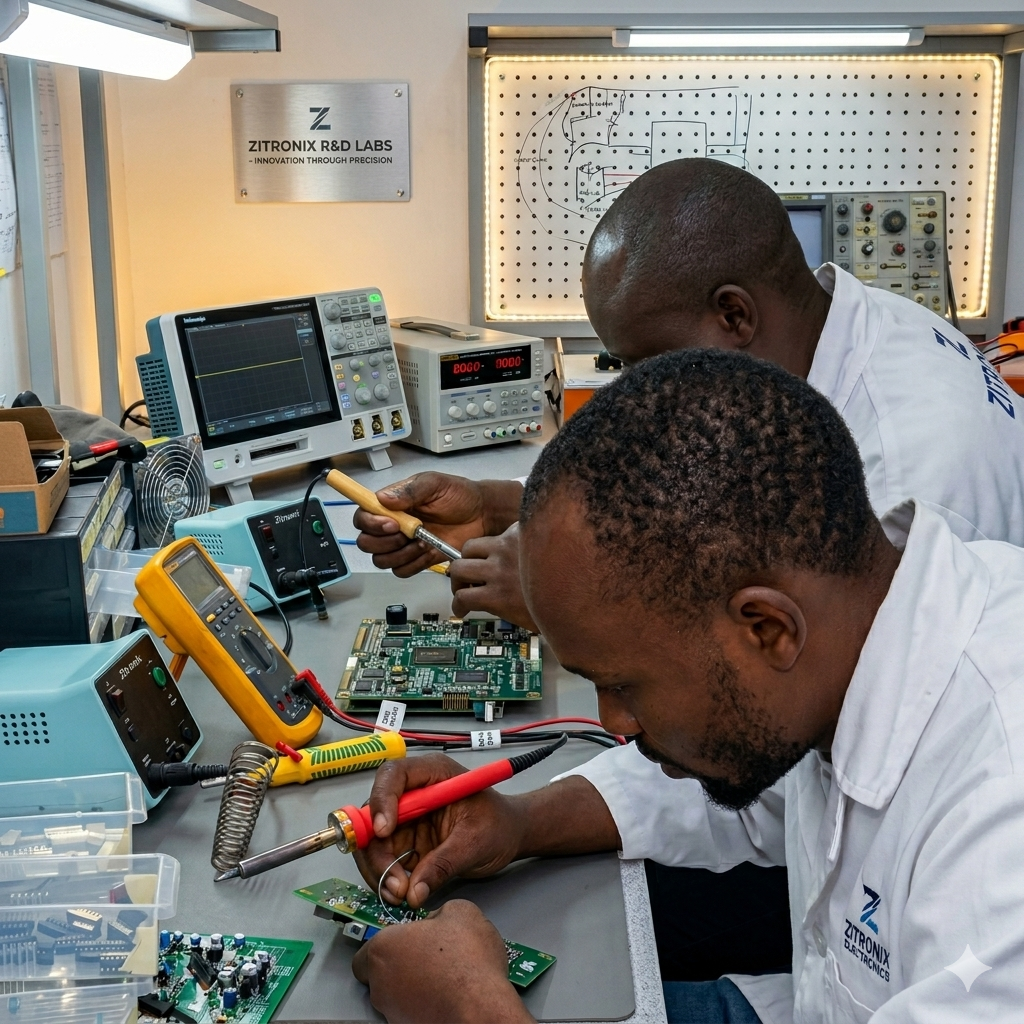
Across Nigeria, a quiet revolution is happening on rooftops and inside factory utility rooms. Driven by the need for reliable energy, businesses and homes are switching to solar power at a record pace. Yet, a critical roadblock threatens this transition.
Recent industry research highlights a major challenge in Nigeria’s renewable energy landscape: a severe lack of competent installers and inverter repair technicians. While high-quality hardware lands at our ports daily, the local technical capacity to design, optimize, and maintain these systems has not kept pace.
At Zitronix Engineering, we believe that Powering Innovation across Africa requires more than just importing hardware. True sustainability comes from investing in people. To build long-term energy security, Nigeria must transition from basic equipment installation to master-level Power Electronics engineering.
The Core Dilemma: Components vs. Competence
Most renewable energy training programs in Nigeria focus on the basics: how to mount a solar panel on a roof and connect cables to a pre-built inverter box. While this satisfies the immediate demand for residential setups, it falls short for industrial automation and large-scale power systems.
An inverter is not a passive appliance; it is a complex piece of Power Electronics Design. Inside every modern inverter is an array of high-speed switching transistors, microcontrollers running embedded firmware, and delicate feedback loops that manage voltage and frequency.
[Solar Panels (DC)] ➔ [Inverter (High-Speed Switching)] ➔ [Grid/Load (AC)]
                             ▲
                [Embedded Firmware/Control Loop]
When an industrial inverter fails in an agro-allied factory or an oil and gas facility, the issue is rarely a broken panel. It is usually a component-level failure within the control system or power stage. Without advanced skills in local PLC programming and circuit diagnostics, local businesses face long operational downtimes waiting for foreign technical support or expensive replacement parts.
Upgrading the Curriculum: Inverter Engineering Courses for the Next Generation
Bridging this gap requires a major shift in how we train technical talent. Institutional clients, research organizations, and public sector human resource managers need to move past standard solar installation tutorials. We need comprehensive inverter engineering courses that focus on core engineering principles.
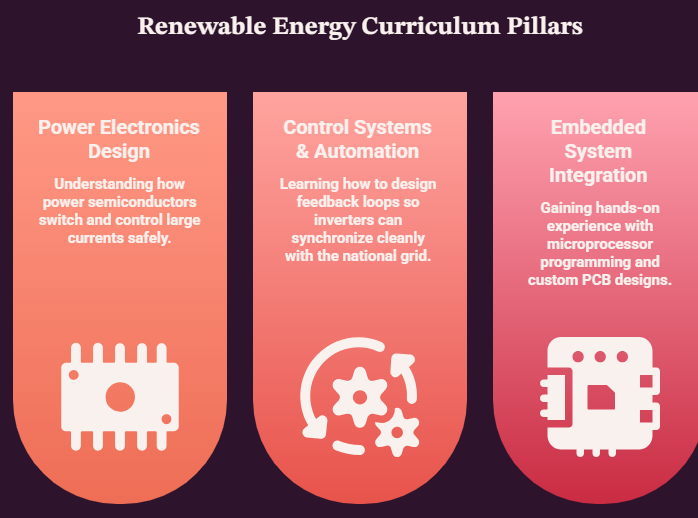
A modern renewable energy curriculum should emphasize three primary pillars:
- Power Electronics Design: Understanding how power semiconductors (like IGBTs and MOSFETs) switch and control large currents safely.
- Control Systems & Automation: Learning how to design feedback loops so inverters can synchronize cleanly with the national grid or factory mini-grids.Zitronix-Local-Manufacture-Power-Electronics-Nigeria-Solar-Inverter-Engineering.png
- Embedded System Integration: Gaining hands-on experience with microprocessor programming and custom PCB designs, ensuring that technicians can diagnose problems right down to the silicon level.
By focusing on these areas, Nigeria can develop a workforce capable of creating tailored automation solutions in Nigeria, reducing dependency on imported technical expertise.
Strategic Value: Why Institutional Technical Partnerships Matter
For research institutions, private training organizations, and public sector entities, developing this local talent is a strategic opportunity. Building domestic expertise in Industrial Automation and renewable infrastructure creates clear advantages:
For Research Institutions & Universities
Partnering with a dedicated power electronics engineering firm allows academic institutions to align their research with real-world industry needs. It moves engineering education from theoretical textbooks to hands-on prototyping.
For Public Sector & Government Agencies
Investing in structured professional development programs directly addresses youth unemployment. It creates high-value, sustainable jobs in engineering innovation across Africa, transforming installers into technical creators. See our recent Zitronix Electrical Installation/Power Electronics training partnership with ITF through the SUPA training program.
For Private Training Facilitators
Offering advanced certifications in hardware diagnostics, control panel design, and energy management sets your curriculum apart in a crowded educational market.
Zitronix Engineering: Your Partner in Human Capital Development
At Zitronix, we view ourselves as more than a service provider—we are a dedicated technical partner. We work closely with public and private organizations to provide structured training, specialized equipment consulting, and workforce development.
Our work spans multiple disciplines designed to build local engineering capacity:
- Industrial Automation Nigeria: We design and deploy robust control systems and automation solutions that optimize energy efficiency for factories and heavy machinery.
- Mini-Grids & Rural Electrification: We create scalable mini-grid solutions built to withstand the unique environmental and electrical challenges of the African terrain.
- Hardware Design & Technical Consulting: From custom control panels to embedded systems, we provide local content that matches international engineering standards.
The Path Forward: True energy independence is not built on imported equipment alone. It is sustained by local hands that understand exactly how that equipment works, bends, and heals.
Building a Sustainable Energy Future Together
The future of Power Solutions in Nigeria relies on expanding our local technical capacity. By bridging the skill gap between basic installation and advanced power electronics, we protect our investments in renewable energy, lower operational costs for industries, and build a self-reliant technical ecosystem.
Whether you are a public sector manager designing a regional development initiative, a research institution looking for an engineering partner, or a private company looking to upgrade your technical team’s skills, Zitronix is here to help.
Let’s co-create the training programs and technical solutions that will power Africa’s industrial tomorrow.
Connect with the Zitronix Team: Visit our website at Zitronix Engineering or reach out through our official social media channels to discuss training partnerships, institutional consulting, or custom engineering projects.