The WeLight $31M Validation: Why Institutional Investors are Betting Big on Nigeria’s Mini-Grid Future
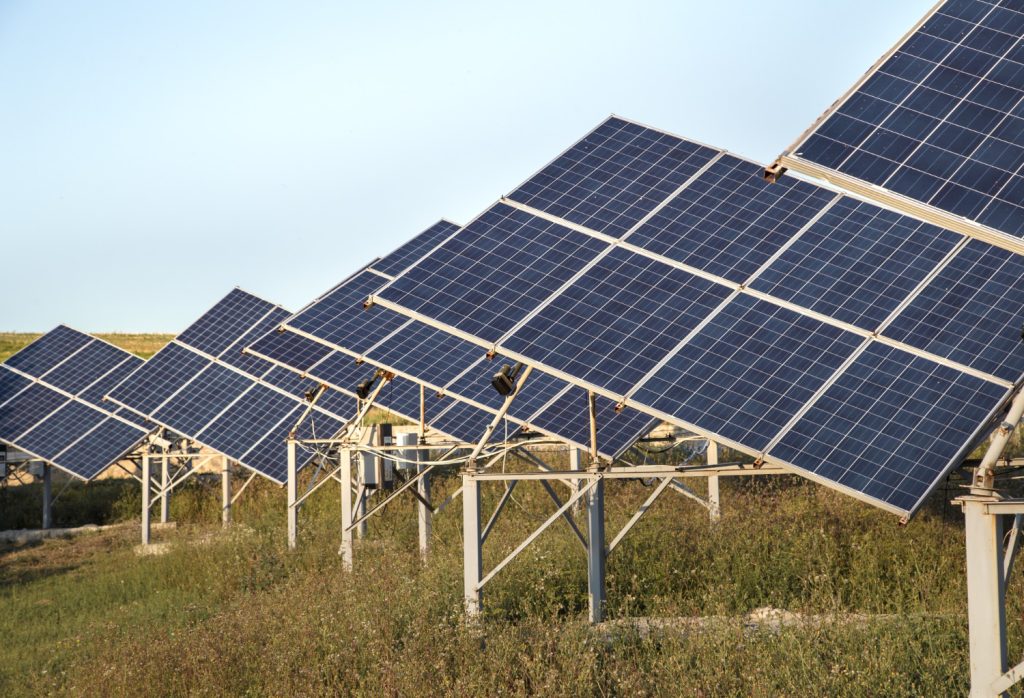
The landscape of Engineering Innovation Africa wide is undergoing a massive, institutional-grade shift. WeLight, Africa’s largest operational solar mini-grid provider, recently secured a historic $31 million (€27 million) capital injection. Backed prominently by the World Bank’s International Finance Corporation (IFC), along with institutional heavyweights like Norfund and the Axian Group, this funding is explicitly earmarked to accelerate energy expansion into Nigeria and the Democratic Republic of Congo (DRC).
For years, many viewed decentralized solar arrays as temporary, localized stopgaps—charity-funded fixes meant for basic illumination. This $31M milestone changes the narrative completely. It acts as a hard financial validation that distributed solar infrastructure is now a prime asset class.
The underlying data explains why this capital is moving so aggressively. Nigeria and the DRC represent the two largest populations on earth completely cut off from stable, centralized grid electricity. In Nigeria alone, over 85 million people live without reliable grid access. For industrial manufacturing partners, real estate developers, and commercial estate operators, waiting for centralized utility lines to fix themselves is no longer a viable business strategy. This massive influx of capital proves that decentralized networks are becoming the primary infrastructure driving Powering Innovation across the continent.
In Nigeria alone, over 85 million people live without reliable grid access.
Why Institutional Capital is Flooding into Nigeria’s Decentralized Solar Space
The traditional, centralized grid model is struggling to keep pace with modern economic demands. For any forward-thinking factory manager or estate operator, relying on a system plagued by transmission bottlenecks and aging infrastructure is a massive operational risk. Instead of waiting decades for macro-grid extensions, international Development Finance Institutions (DFIs) and private private equity firms have recognized Nigeria as the most high-yield, viable market for Distributed Renewable Energy (DRE).
Driven by large-scale global initiatives like the World Bank and African Development Bank’s Mission 300—which aims to connect 300 million Africans to electricity by 2030—the mini-grid sector has moved past small-scale residential setups. We are now seeing a massive transition where high-capacity microgrids are deployed to power:
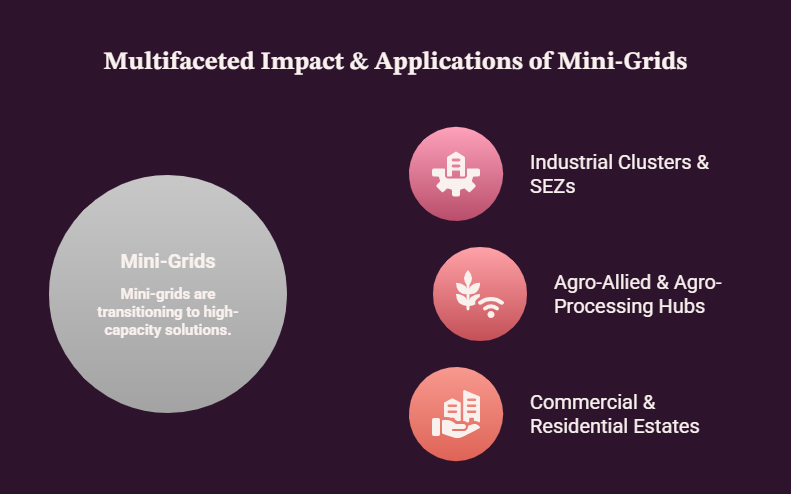
- Industrial Clusters & Special Economic Zones (SEZs): Where consistent voltage is required for heavy machinery.
- Agro-Allied & Agro-Processing Hubs: Requiring reliable, automated processing and cold-storage facilities far from urban centers.
- Large-Scale Commercial & Residential Estates: Where property developers use clean energy infrastructure as a premium selling point to eliminate the noise and high costs of diesel generators.
As a leading Renewable Energy Company Nigeria trusts, Zitronix Engineering sees this transformation daily. Capital is fully available, and the financial frameworks are institutionalized. However, deploying capital is only the first step; the real challenge lies in the deep physics of electrical engineering.
The Engineering Hurdle: Why Funding is Only Half the Battle
While a $31M injection can buy containers full of premium solar panels and lithium-ion batteries, it cannot buy operational longevity. A significant percentage of commercial solar installations across Sub-Saharan Africa experience premature component failure within their first 24 months. The reason? They are often treated as simple retail assembly projects rather than complex industrial-grade ecosystems.
When you transition from lighting low-load appliances to running heavy machinery or estate-wide distribution networks, the electrical environment becomes unforgiving. This is where specialized Power Electronics Design separates long-term infrastructure from costly failures:
The Threat of Total Harmonic Distortion (THD) & Peak Loads: Heavy industrial machinery, automated water pumps, and commercial HVAC systems draw massive inrush currents when starting up. Without precise Control Systems and robust power processing, these load spikes create severe harmonic distortion. This electrical noise quickly degrades inverters, overheats transformers, and destroys sensitive digital logic boards.
To survive local environmental realities—ranging from intense equatorial heat to the fine, abrasive dust of the harmattan season—mini-grids require ruggedized internal layouts. They require specialized thermal management and precise component calibration that generic, off-the-shelf imports simply cannot provide.
Designing for Zero Downtime: The Zitronix Blueprint
At Zitronix, we actively bridge the gap between massive infrastructure capital and flawless technical execution. We don’t just position ourselves as an installer; we are a specialized engineering firm capable of executing high-capacity, rugged systems. Our engineering frameworks ensure that institutional investments deliver a reliable return on investment through robust design:
1. Millisecond-Level Load Transitions
Industrial production lines and sensitive estate electronics cannot tolerate power sags or reboots. We design advanced Control Panel Design Firm Nigeria standards into our power hubs, enabling seamless, millisecond-level transitions between solar generation, battery storage, and alternative backup inputs. When input parameters fluctuate, our power electronics handle the shift invisibly.
2. Tailored Local Automation and PLC Programming
A truly smart microgrid must dynamically balance generation against changing loads. Through advanced Automation Engineering, we deploy Local PLC programming to prioritize critical industrial loads, shed non-essential paths automatically during low-solar intervals, and optimize overall energy dispatch.
3. Deep Load Profile Analysis & Climate-Resilient Autonomy
We do not use generic sizing calculators. Our team conducts rigorous, localized load profile analyses to custom-build high-capacity microgrids (ranging from 15kVA up to multi-megawatt industrial configurations). By cross-referencing regional weather data, we architect precise autonomy reserves—ensuring your facility maintains peak Energy Efficiency and continuous power even during heavy rainy seasons or dust storms.
| System Attribute | Generic Solar Installation | Zitronix Engineered Microgrid |
| Inrush Handling | Frequent inverter tripping on heavy loads | High-surge power electronics calibration |
| System Intelligence | Manual changeovers or basic timers | Integrated Industrial Automation & PLC load-shedding |
| Component Ruggedness | Standard commercial enclosures | Sealed, thermally optimized industrial layouts |
From Power Electronics development to localized Mini-Grids & Rural Electrification Solutions, our goal is simple: deliver zero-downtime infrastructure that operates autonomously for decades.
Powering the Future of African Industry
The WeLight expansion is a clear green light for the entire West African market. The future of energy in Nigeria is decentralized, high-capacity, and solar-driven.
Whether you are a commercial estate developer looking to offer uninterrupted power to residents, an agricultural operator scaling automated industrial pumping, or an enterprise aiming to completely eliminate diesel costs—infrastructure requires rigorous engineering. True operational stability requires a Hardware Design Expert Nigeria understands, backed by a premier Power Systems Engineering Company Nigeria relies on.
Don’t leave your infrastructure investments to chance. Learn more about our specialized systems by exploring our Smart Home & Energy Designs, or partner with us to transform your facility’s operational capabilities.
Contact the Zitronix Engineering team today via our official website or connect with our specialized inverter and microgrid engineers on our social media platforms to schedule a comprehensive technical consultation for your project.
This is intriguing