7 Important Questions to Ask Before You Contact A Solar/Inverter Installation Company

Let’s face it: relying on the national grid or fueling a noisy, expensive generator is no longer sustainable. If you are reading this, you are likely ready to take control of your power. Transitioning your home or business to clean energy is one of the smartest investments you can make in Nigeria today.
However, walking blindly into the market can lead to costly mistakes. The market is saturated with options, and without the right guidance, it is easy to fall into the trap of sub-standard components or poor setup configurations. To safeguard your hard-earned money and secure reliable power, you need to know exactly what you are paying for before signing any contract.
Whether you are looking for a certified Inverter Installer in Warri & Effurun or planning a massive project elsewhere across the country, asking the right questions changes everything. Here are 7 critical questions to ask yourself and your prospective service provider before installing a new system.
1. What is My Actual Peak Load and Daily Energy Consumption?
Before reaching out to a solar installer, you need a clear picture of what you want to power. A common mistake is buying a system based on guesswork, which leads to overloading or paying too much for unnecessary capacity.
- Peak Load: The maximum amount of electricity your property draws at a single moment (e.g., when your AC, pumping machine, and refrigerator click on at the exact same time).
- Daily Consumption: The total kilowatt-hours (kWh) you use over a 24-hour period.
A certified solar engineer will always conduct a comprehensive energy audit before giving a quote. They calculate these metrics mathematically so your tailored solar engineering and renewable energy design matches your specific lifestyle or industrial demands.
2. Are You Deploying a Low-Frequency or High-Frequency Solar Inverter?
Not all inverters are built the same way inside. In Nigeria, our heavy appliances like deep freezers, pumping machines, and air conditioners require a massive spike of current just to kickstart their motors.
- Low-Frequency Inverters: Built with heavy copper transformers, these are excellent at handling high surge currents. They are incredibly rugged and highly recommended for Nigerian homes and industries running heavy inductive loads.
- High-Frequency Inverters: Sleeker, lighter, and highly efficient for electronic devices, but they can easily fail if pushed past their surge limits by heavy motorized appliances.
Ensure your installer clarifies the architecture of the solar inverter they intend to deploy so it aligns perfectly with your machinery or household appliances.
3. How Do We Intend to Manage Component Degradation Over Time?
Every power solution has a lifespan. The moment your system goes live, chemical degradation begins in the batteries, and electronic wear begins inside the inverter components.
You need to ask how the engineering team intends to mitigate this. For instance, high heat levels significantly accelerate component wear. Experienced professionals design systems with robust active cooling ventilation and choose premium internal electronics capable of handling ambient temperatures. To maximize your investment, check out these expert insights on how to manage degradation in your solar inverter system to keep your setup running efficiently for over a decade.
4. Why Use a Professional Solar Engineer Over a Roadside Inverter Installer?
It can be tempting to hire a local roadside electrician who claims they can couple a few batteries and panels together for a cheaper price. However, cut-rate setups often lead to electrical fires, ruined appliances, and dead batteries within a year.
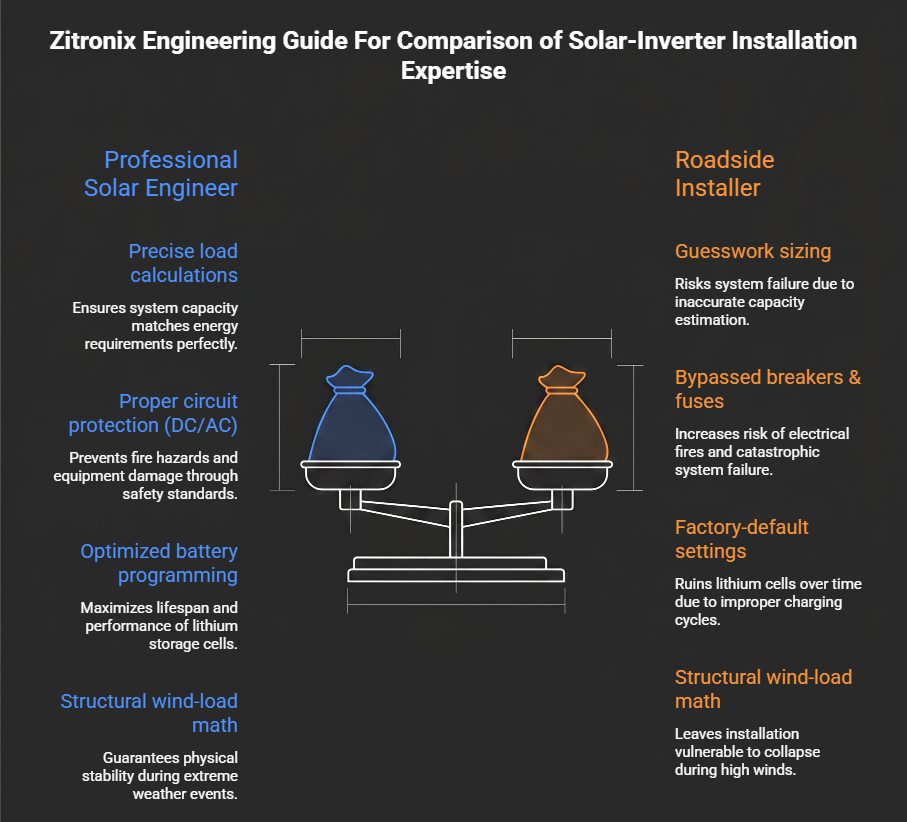
| THE EXPERT ADVANTAGE |
+————————————+————————————+
| Professional Solar Engineer | Roadside Installer |
+————————————+————————————+
| * Precise load calculations | * Guesswork sizing |
| * Proper circuit protection (DC/AC)| * Bypassed breakers & fuses |
| * Optimized battery programming | * Factory-default settings (ruins |
| * Structural wind-load math | lithium cells over time) |
+————————————+————————————+
Working with dedicated experts means you are paying for structural safety, proper balancing, and system longevity. For a deep dive into why technical qualifications matter, read about the 10 reasons why solar engineers are better than roadside solar inverter installers.
5. What Type of Battery Chemistry Are You Using, and How is it Programmed?
Your energy storage is the heart of your renewable energy system, and it is usually the most significant part of your financial investment.
- Lithium-Ion Battery (specifically LiFePO4): These offer up to 4,000 to 6,000 cycles at a deep depth of discharge. They charge faster, last 6 to 8+ years, and include an internal Brain called a Battery Management System (BMS).
- Tubular/AGM Lead-Acid: Cheaper upfront but heavy, they can last 3 to 4 years when procurement is from a reputable vendor.
If you choose a premium Lithium Ion Battery, ensure your inverter expert configures the inverter to talk directly to the battery’s BMS via communication protocols (like CAN or RS485). If they do not link them up, the inverter will treat your advanced lithium battery like an old car battery, shortening its life.
6. Do You Offer a Customized Solar Energy Inverter Installation Plan for Growth?
Your energy needs today might not be your energy needs three years from now. You might add a new delivery vehicle charging station, expand an industrial floor, or welcome new family members home.
Always ask for a modular system design. A truly professional solar inverter engineering service ensures your initial setup can accept additional solar panels or allow parallel synchronization of an extra hybrid solar inverter down the line without forcing you to scrap your existing equipment.
7. What is Your Local Support, Warranty, and After-Sales Policy?
When a technical glitch happens at 11:00 PM on a rainy Sunday, you need to know who is coming to fix it.
- Does the installation company have a physical workshop nearby?
- Do they offer a real, component-level warranty backed by field engineers, or do they just pass the buck back to an overseas factory?
If you are looking for a dependable Solar Installer in Effurun & Warri or across wider regional zones, choose a partner with a transparent, responsive support track record to protect your system from extended downtime.
Powering Your Future with Zitronix Engineering
Choosing a clean energy system shouldn’t feel like a gamble. By asking these seven fundamental questions, you shift from being a passive buyer to an informed investor who values quality engineering.
At Zitronix, we pride ourselves on delivering world-class power electronics engineering solutions across Nigeria. We combine advanced theoretical design with rigorous field execution to deploy rugged, smart, and highly efficient energy frameworks built for our unique climate.
Don’t settle for unverified configurations or roadside guesswork. Let’s design a sustainable, reliable power ecosystem tailored exactly to your home or industrial facility.
Let’s design a reliable power setup that fits your home perfectly. Visit our dedicated Zitronix Power Electronics Engineering hub to request a custom quote, or connect with our technical support team through our official website contact page today. Let’s build a brighter, self-sufficient future for your home!